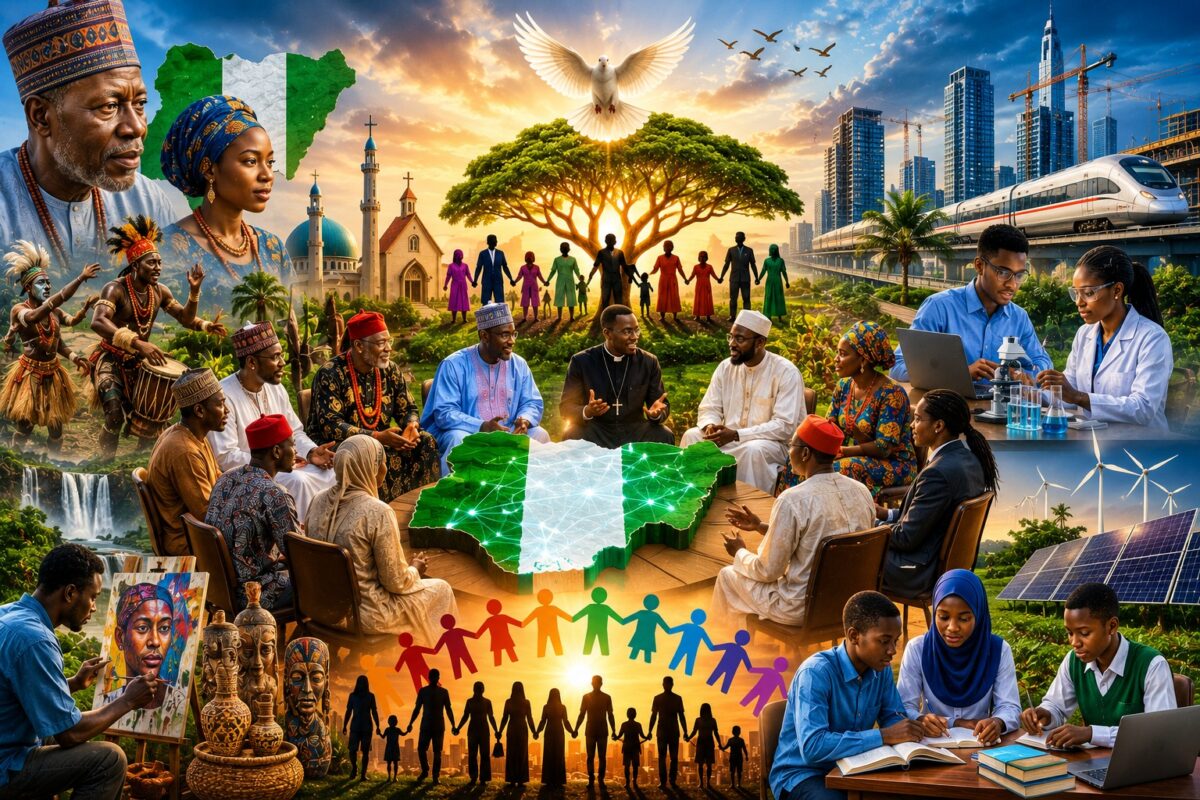
Pluralism is a set of intentions and a practice that seeks to institutionalize the recognition of difference and respect for diversity as civic culture. In Nigeria, manifold ethnicity, religious differences, diverse political affiliations, multiple indigenous languages and dialects are the core characteristics of the country. Over the years, these differences have resulted to different forms of violent conflicts and terrorism. The resultant effects are in most cases defined in the area of destruction of lives and properties which is described as
„development in reverse‟. The question is “Does diversity work against development? How can a plural state progress on the part of development?” Using Ola Rotimi‟s Hopes of the Living Dead as a benchmark, recognition of diversity itself as a precursor to pluralism can serve as a pathway and create a common ground for sustainable development. This investigation highlights the concept of pluralism and diversity and adopts development theories for data analyses. The study concludes that politics and policies of inclusion, inter-ethnic accommodation and inclusive institutions can promote a sense of belonging, loyalty and peace in the country. It also sees connection as a link to different creative views and self-sufficiency essential for sustainable development.
Diversity, Pluralism, Development, Connection, Violent Conflict.