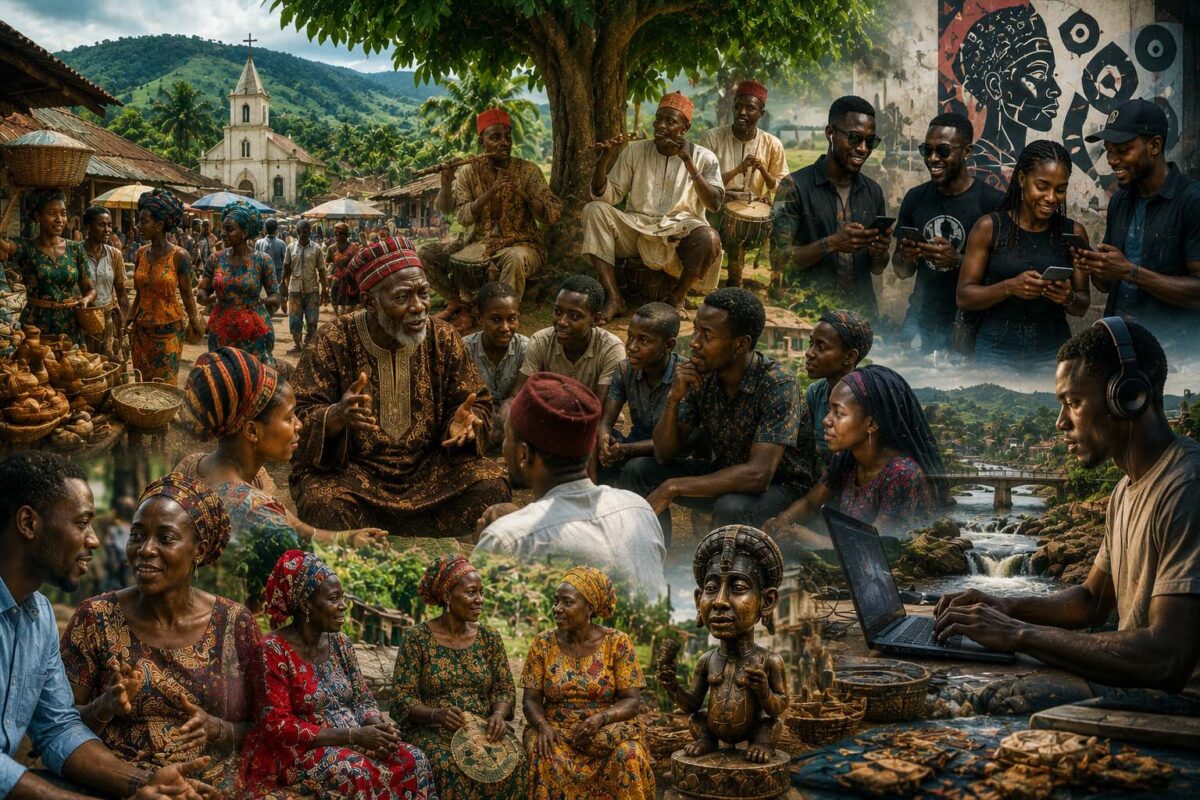
In every society, language and culture are two interwoven important aspects that constitute the makeup of mankind. The word Ngwa, refers to the dialect, the people and the geo-political area known as Ngwa land. The Ngwa people are found in Abia State in the Federal Republic of Nigeria. Of the seventeen Local Government Areas in Abia State, seven belong to the Ngwa people. These Local Government Areas are: Isiala Ngwa North, Isiala Ngwa South, Obingwa, Osisioma, Aba North, Aba South and Ugwunagbo. Some of the objectives of this paper are: to illustrate that every cultural aspect of man has its own linguistic repertoire, to demonstrate that culture is the dignity of man, to show that culture determines the extent that a norm is observed and the constraints it places on a people. The theoretical framework on which this paper is discussed is ethnography of communication. This theory is concerned with the sociocultural rules that form the basis of every linguistic act. The method of data collection for this paper is participant observation, where the researcher is absolved into the speech community for a period of time in order to perceive the salient features in the culture of a people. Some of the findings of this paper are: that language and culture are indispensable aspects of humanity, that personhood (humanity) is sustained by the constrains which culture places on man in his society, that every culture has its unique cultural behavior and linguistic repertoire and finally, that the acquisition of the appropriate cultural and linguistic behaviour of a person in a certain society is part of that person‟s social competence for existence as a person in his community.
Competence, ethnography, personhood, popular culture, Ngwa, sociolinguistics.