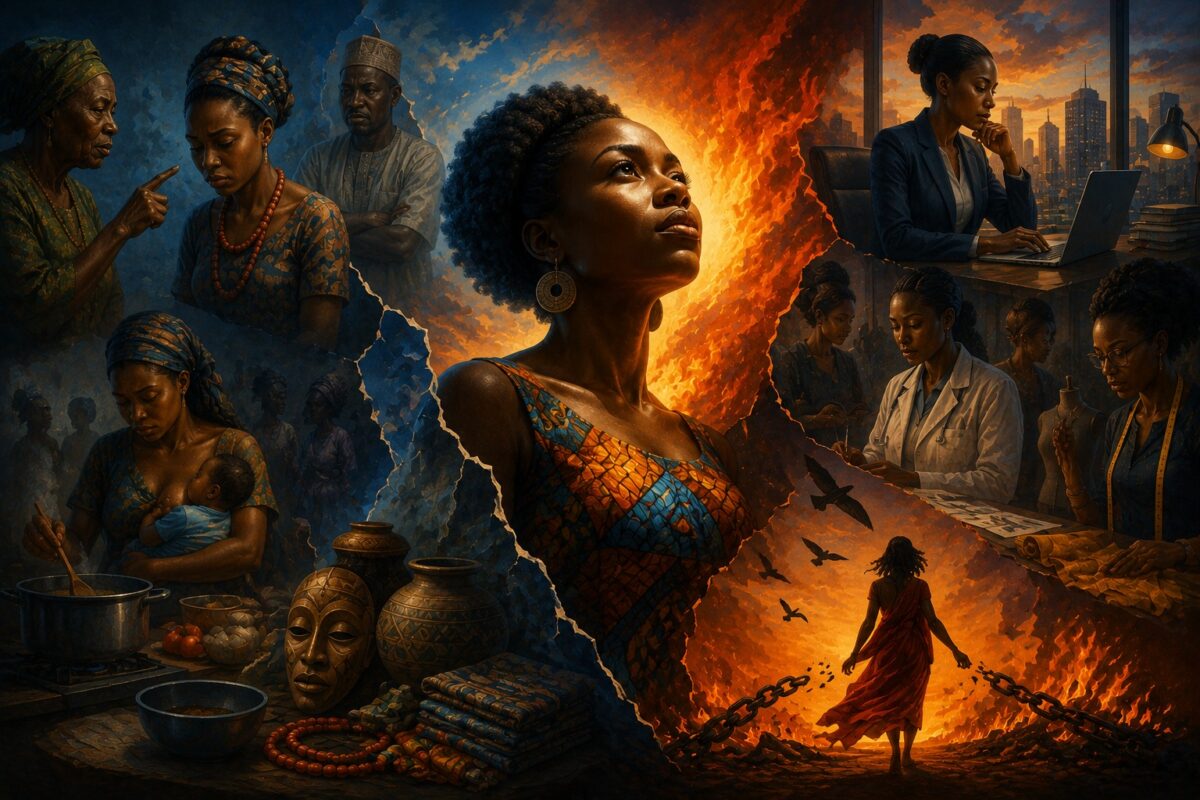
Women in the African society have known social, cultural and political dispossession over the past decades. The socially and culturally constructed norms and expectations that shape what and how women should think and perform in the society have implications for their empowerment and subsequent development generally. The overall pattern of gender norms favours men in the distribution of power, resources and opportunities. Cultural traditions, norms, and expectations have often perpetuated gender inequality, causing physical and psychological harm to millions of women across Africa. In this paper, through the tenets of Raymond Williams’ ideology on Cultural Materialism, an analysis of Unoma Azuah’s Sky High Flames, depicts a young African woman’s typical problems in traditional African society: the domestic labour required of girls, the practical harsh reality of preparing for a lifetime of drudgery, the requirement to fulfill social expectations by marriage, the attainment of social status through childbirth, the expectation that wives will accede to the prescribed sexual standards in marriage, and the power politics in sexual relations between men and women. The paper discovers that the contemporary woman in Africa is fed up with some of these norms that attempt to stifle her as such norms hinder her development and emphasises the need to look into such unfavourable conditions which are the positions of the oppositional group. The paper concludes that there should be a just gender system in which there are no asymmetries of access to the allocation of status, power and material resources in especially contemporary African society.