Islam And Religious Switching: An Assessment Of The Factors Of Religious Mobility In Edo State, Nigeria
Emmanuel I. Ukpebor & Abdulrazaq O. Kilani
Department of Religious Management and Cultural Studies, Ambrose Alli University, Ekpoma, Nigeria & Department of Religious and Cultural Studies, University of Port Harcourt, Nigeria.
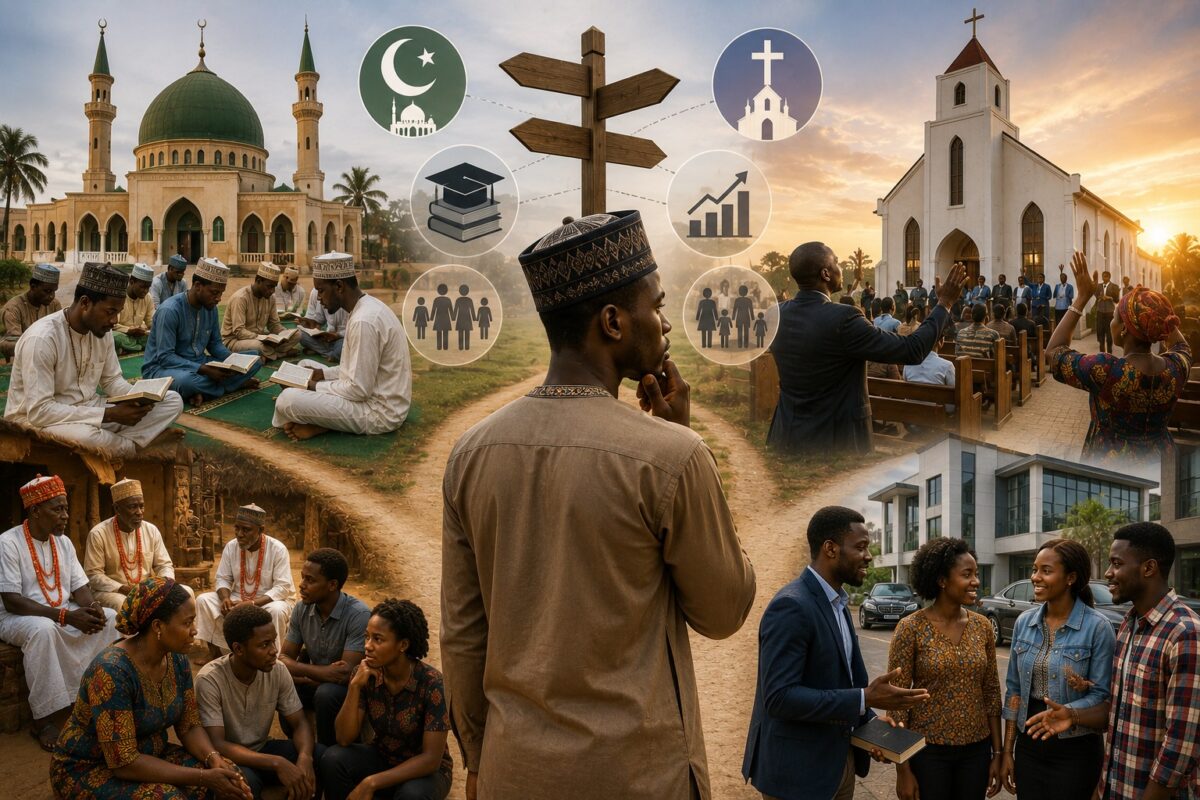
One phenomenon of post-modernity is the mobility of adherents of religions from one religion to another; and this seldom attracts the interest of scholars to do scholarly investigation on the phenomenon towards ascertaining its effect on societal harmony and development or otherwise. This paper explores the phenomenon of switching religion with a major focus on the movement into and out of Islam in Edo State; a religiously plural society. The paper adopts the rational choice theory, coupled with the social inertia and strains theory of religious switching. It found out that besides the theological reasons of religious mobility, socialization, geographical mobility, exogamy and socioeconomic problems line up among the factors that orchestrate switching. The research further established that in a plural society like Edo State, it serves some benefits in terms of marital engagement and harmonious religious interactions. The paper recommends effective policy measures on the part of the Government that will address the socioeconomic problem of poverty which is the bedrock pushing individuals to switch for religious succor. Also, it calls for policy measures that would stem the media publicity of religious possibilities of unverified miracles. The paper posits in submission that religion, in spite of the postulation of scholars that it will dwindle with the development of science and technology, still flourishes and serves useful benefits for societal growth and development when explored and managed properly through the understanding of its dynamics as a force of societal cohesion.
Islam, Switching and Religion